Food — the pads
The flat green pads (nopales) are eaten as a vegetable across Mexico and beyond — grilled, sautéed, in tacos, salads, and eggs. They’ve been a staple for 9,000 years. See Best Nopal Recipes and how to clean and prepare them.
Food — the fruit
The magenta fruit (tuna, or prickly pear) is eaten fresh, dried, and made into candies and preserves. Learn how to eat prickly pear fruit.
Cactus water
Pressed from the fruit, cactus water is the modern functional beverage — lower sugar than coconut water, with betalain antioxidants. See What is Cactus Water and cactus water vs coconut water.
Medicine
Nopal has been used medicinally for millennia, and modern research confirms several uses — blood-sugar control, cholesterol reduction, anti-inflammatory effects. See Nopal Cactus Health Benefits.
The anatomy behind the uses
Every use in this catalog starts at a specific part of the plant. Tap the plate to see which.
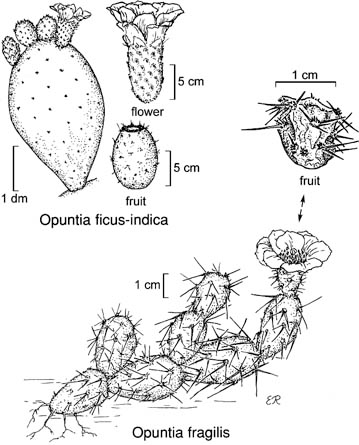
cladode · the pad
The pad.
cladodium · also: nopalito, paleta
Flat, fleshy, segmented. The pad is everything — vegetable, water store, photosynthesis organ, structural element. Indigenous Mesoamericans grilled, pickled, juiced, and built with them.
— what it becomes —
Cochineal — the red dye
The nopal pad hosts the cochineal insect, source of the most prized red dye of the pre-industrial world. By 1600 it was Mexico’s second most valuable export after silver — it dyed British army coats, cardinals’ robes, and is still used today as natural food coloring (E120).
Cactus leather (Desserto)
Desserto is a vegan leather made from mature nopal pads, developed in Mexico and now used in fashion, accessories, and car interiors. It’s partially bio-based, breathable, and harvested without killing the plant — a leading sustainable leather alternative.
Prickly pear seed oil
The fruit’s seeds yield one of the most expensive cosmetic oils in the world — it takes roughly a ton of fruit to make a liter. See Prickly Pear Seed Oil.
Bioplastic, fodder, and fuel
Nopal mucilage is being developed into biodegradable plastics; the pads are a major drought-resistant livestock fodder across arid regions; and the plant is studied as a biogas feedstock. Its water efficiency makes it a priority crop for a warming world — see Where Does Nopal Grow.
Living fences and erosion control
Dense, spined nopal has been planted as living fencing and hedging for centuries, and its shallow, spreading roots make it valuable for stabilizing soil and fighting desertification.